Self-Healing with Crohn’s Disease
An overview of Crohn’s disease, common medical approaches, and gentle self-help tools for inner inquiry that may support living with the condition alongside proper medical care.
Understanding Crohn’s disease and how it is treated
In this article you’ll find medical and academic information about Crohn’s disease, and toward the end, practical tools for self-help and self-healing that may support you in living with Crohn’s.
Crohn’s disease is a chronic inflammatory condition of the digestive system. Unlike some other inflammatory bowel diseases, the inflammation in Crohn’s can penetrate deeply into all layers of the intestinal wall.
The disease is named after Dr. Burrill Crohn, the American physician who first described it.
In Crohn’s, inflammation can appear anywhere along the digestive tract, from the mouth to the anus, though it is more common in the final part of the small intestine.
Conventional medicine does not know the exact cause of Crohn’s disease. It is generally understood as involving a combination of possible factors, including genetics, the immune system, and environmental influences such as nutrition or previous infections. Later in this article, I’ll also share an inner perspective on emotional triggers, along with practical tools for self-help.
Symptoms of Crohn’s disease
Symptoms can vary from person to person and may be mild or severe. Common symptoms include:
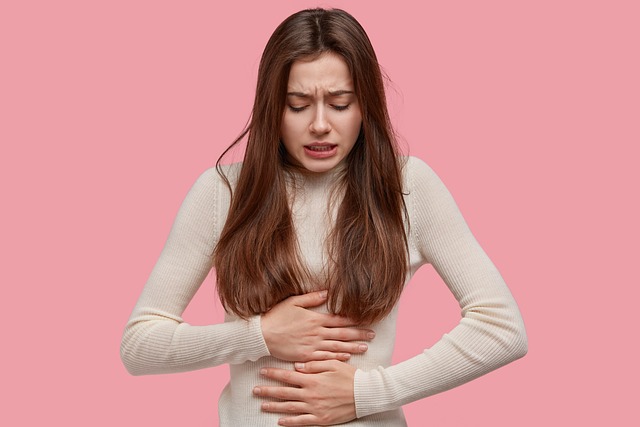
- Abdominal pain: strong pain or cramping, especially after eating
- Diarrhea: frequent diarrhea, sometimes with blood or mucus
- Weight loss: due to difficulty absorbing nutrients
- Fatigue and weakness: related to chronic inflammation
- Fever: which can indicate a flare
- Anemia: often linked to iron deficiency from blood loss
How Crohn’s disease is diagnosed
Diagnosis is made by a gastroenterologist and may include:
- Blood tests: to check inflammation, anemia, and other markers
- Stool tests: to look for blood or bacteria
- Colonoscopy: to examine the large intestine and parts of the small intestine
- Enteroscopy: to examine the small intestine
- Imaging tests: such as CT or MRI, to get a fuller picture of the digestive tract
Characteristics of Crohn’s disease
- Chronic inflammation: symptoms often come in flare-ups and quieter periods
- Location of inflammation: it may appear anywhere in the digestive tract, though it is common in the end of the small intestine
- Depth of involvement: the inflammation can affect all layers of the bowel wall, unlike ulcerative colitis, which mainly affects the inner lining
- Varied symptoms: depending on location and severity, symptoms may include abdominal pain, diarrhea, weight loss, fever, fatigue, and weakness
The difference between ulcerative colitis and Crohn’s
Although they are similar in some ways, Crohn’s disease and ulcerative colitis are not the same.
Ulcerative colitis affects the lining of the large intestine, while Crohn’s can affect the digestive tract more broadly and can involve deeper layers of the bowel wall.
Key differences include:
- Location: ulcerative colitis affects only the colon; Crohn’s can affect any part of the digestive tract
- Continuity: inflammation in ulcerative colitis is continuous, while in Crohn’s it may appear in patches
- Depth: ulcerative colitis is limited mainly to the innermost lining; Crohn’s may involve all bowel wall layers
- Symptoms: both may cause diarrhea, abdominal pain, blood in the stool, fever, and weight loss. Ulcerative colitis often involves more bloody diarrhea, while Crohn’s may involve more severe abdominal pain
Treatment options for Crohn’s
In conventional medicine
Medical treatment is tailored individually according to the severity of the disease and the location of the inflammation. It may include:
- Medication: anti-inflammatory drugs, steroids, immune-suppressing medications, and biologic therapies
- Nutrition: a personalized diet may help reduce symptoms
- Surgery: in some cases, removal of part of the intestine may be necessary
Alongside medical treatment, some people also look for non-invasive ways to support themselves.
Ways to support yourself while living with Crohn’s
There are different approaches to self-help with Crohn’s. From my own research and experience, I want to share tools for inner work—approaches developed by people who understood illness as connected, at times, to unresolved emotional conflicts.
These approaches invite a person into honest inner inquiry: to ask what the illness may be expressing or trying to resolve, to remember what was happening before the disease appeared, and to explore whether emotional patterns, stress, or unresolved experiences may play a role in flare-ups.
I do not suggest replacing medical care. Rather, this is an invitation to add another layer of listening.
Some inner-healing approaches view intestinal distress as connected to experiences that feel hard to “digest.” This may relate to anger, injustice, painful family dynamics, or situations that were difficult to accept or process.
Sometimes what feels impossible to digest is emotional. Sometimes it is something concrete and physical. Often, it is both.
Crohn’s as part of an emotional healing process
The body may express what the psyche has not yet been able to process
According to inner-healing frameworks such as New German Medicine and Recall Healing, symptoms may sometimes be understood as part of the body’s response to unresolved inner conflict.
In these frameworks, when a person experiences something as deeply difficult to digest, the body is understood to enter a biological stress response. Later, when that conflict begins to resolve, symptoms may intensify for a time as part of a recovery phase.
From this perspective, diarrhea, abdominal pain, and even acute flare-like symptoms may sometimes appear around periods of inner change, emotional release, or the loosening of an old conflict.
These ideas are not part of mainstream medicine, and they should be approached carefully and thoughtfully. Still, many people find value in exploring the emotional timing of their symptoms and in asking what inner burden may be seeking resolution.
If flare-ups keep returning, these approaches would often describe that as a sign that certain emotional triggers are still being activated again and again, interrupting the body’s settling process.
Self-healing with Crohn’s
Writers and practitioners influenced by these approaches suggest that full healing requires identifying, as precisely as possible, both the original conflict and the triggers that keep reactivating it—then gradually learning how to reduce those triggers or soften their effect.
Sometimes the original conflict may go back to childhood, while the illness itself appears years later, after a similar event or an emotional trigger touches the old imprint.
Tools for self-help through identifying the conflict
Emotional conflicts that may be reflected in Crohn’s
If you want to explore Crohn’s through conscious inner work, begin by noticing when it first appeared, and what was happening in your life around that time.
Ask yourself:
- What in my life felt hard to digest?
- What stirred strong anger, hurt, bitterness, or inner turmoil?
- What was I unable to accept?
- What did I feel I had to swallow, contain, or endure?
Many people have found real relief through this kind of inquiry. I would speak about that carefully: not as a guarantee, but as a meaningful path of understanding and support.
Nutrition and Crohn’s
Nutrition can directly support recovery and self-healing with Crohn’s, because some foods are themselves difficult to digest and may act as triggers. During inflammation, the digestive system can also become especially sensitive to certain foods.
The aim is to choose food that is easier to digest and absorb—food that supports the system rather than placing extra strain on tissues that are already irritated.
At the same time, it can be helpful to identify the personal triggers in your life: the situations, relationships, or memories that have been hardest for you to digest emotionally.
It is wise, during recovery, to reduce unnecessary triggers where you can—both physical and emotional.
Examples of emotional conflicts associated with Crohn’s in inner-healing work
These are examples shared in this field of work—real-life patterns people have connected with the onset of illness:
- a child who experienced his mother as relentlessly critical, rejecting, and never satisfied, and who was even blamed for his parents’ divorce
- a child whose father died at a young age
- a woman whose father left home during her childhood
- someone who lost all his property after being exploited by a friend he believed had come to help him in a time of distress
- a person who spent years feeling unable to belong within their own family system, and found the family dynamics too painful or unbearable to emotionally process
Practical points for working with Crohn’s
Crohn’s is common in the small intestine. The small intestine is where we absorb nutrients. In Recall Healing, the small intestine is symbolically linked to a felt sense of belonging—or not belonging—within one’s family “tribe.”
Before any inner tools, I want to strengthen one practical recommendation: even if the approaches below bring quick relief, continue to avoid foods that are hard for you to digest for as long as feels right. Inner healing matters, but when Crohn’s is active, the digestive system is under strain, and it helps to support it with gentle nutrition.
Self-help tools for Crohn’s
One suggested tool is to make a list of situations or problems in which you felt unable to absorb, accept, or process what was happening in your life. Sometimes this involves intense anger. Often, it has to do with something unfolding in the family or in close relationships.
It may also help to remember that symptoms can sometimes appear during a period of recovery and reorganization.
Once you identify a likely conflict, let the insight settle for a few days. Then begin noticing where the triggers connected to it show up in your life.
Ask yourself:
- When during the day or week do I get activated?
- What encounters, thoughts, memories, or interactions stir the old pain?
- Are there triggers I can avoid for now?
- Are there actions, boundaries, thought patterns, or ways of seeing that could reduce their impact?
If the answer is yes, begin with small steps and observe what happens when you reduce exposure to those triggers.
This is a healing process. It does not mean avoiding everything forever. It is a way of checking, gently and honestly, whether creating more inner and outer safety improves your physical condition.
And remember: in a process like this, you are both the one healing and the one being cared for. So be as gentle and forgiving with yourself as you can. Even when the process is challenging, it is not the whole of your life.
If you feel you would like support, you are welcome to reach out to me.