Working with Urticaria
What urticaria is, how it is commonly understood medically, and a self-healing perspective that helps explore the emotional patterns and triggers that may be involved.
What Is Urticaria?
In this article you’ll find medical background I’ve gathered on urticaria, and further down, practical tools for support, care, and self-healing. This is valuable knowledge I’ve collected over years of learning from teachers and researchers who developed methods and gathered insight through their own work. I’m sharing it here because, through nearly fifteen years of deep work with people in my private practice, I’ve seen how practical and helpful this understanding can be.
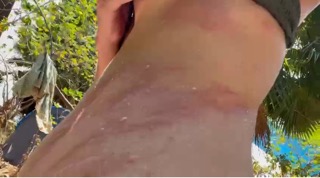
Urticaria, also known as hives, is an allergic or inflammatory skin reaction that appears as a rash, often with intense itching and swelling. The rash develops when histamine is released by immune cells, creating inflammation and widening blood vessels in certain areas of the skin.
Symptoms of Urticaria
Symptoms may include:
- rashes or raised welts on the skin
- intense itching, sometimes to the point of being unbearable
- swelling in certain areas, such as the face, hands, or feet
- in more severe cases, headaches, fatigue, or breathing difficulty
It is also important to know that in many cases, urticaria passes on its own.
Common Medical Causes of Urticaria
Conventional medicine points to a range of possible causes, including:
- Allergies: to foods such as nuts, fish, or dairy, to medications, or to other substances such as insect exposure or cleaning products
- Infections: viral or bacterial
- Environmental factors: heat, cold, physical pressure, or emotional stress
- Medical conditions: including autoimmune conditions and other illnesses
There are also documented cases of urticaria during pregnancy.
Conventional Treatment for Urticaria
Conventional treatment usually focuses on relieving symptoms and helping prevent further flare-ups.
Common options include:
- Antihistamines to reduce itching and swelling
- Steroids in more severe cases, or when antihistamines do not provide enough relief
- Avoiding known triggers, where possible
Self-Healing and Urticaria
Understanding the emotional conflict the body may be trying to process through the symptom
When we experience emotional difficulty that creates inner pressure or stress, our biology cannot simply step out and solve the situation for us. Sometimes the body responds in ways that can be understood as part of its attempt to cope.
Not every emotional conflict leads to illness or disturbance. But from this perspective, when a symptom does appear, it may be meaningful to ask what the body is trying to resolve through it. The body is not against us, and it is not betraying us. When we begin to understand that, we may be able to support physical healing through deeper understanding of what the body is carrying and attempting to process.
According to Dr. Gilbert Renaud, developer of Recall Healing, urticaria is often connected with three main emotional themes:
- separation with anger or resentment
- a sense that my integrity has been violated
- separation mixed with revulsion or rejection
In this view, and also in the work of Dr. Ryke Geerd Hamer, symptoms affecting the epidermis are often linked with separation conflicts. This framework includes urticaria as well.
A common pattern described in these approaches, especially in adults, is a painful separation that was never clearly understood, along with lingering resentment toward the former partner.
Questions That Can Help You Work With Urticaria
Self-healing work invites us to understand symptoms in relation to life events and emotional experience. It can help to gently explore three questions:
- When does it appear, or in what situations does it flare up?
- Where in the body does it appear?
- When did it first begin?
These questions can sometimes reveal an emotional timeline, repeated trigger, or unresolved experience that is still active in the system.
Urticaria in Children and Night Whispers
When urticaria appears in children, some practitioners understand it through what is sometimes called the “project-purpose” period: the year before pregnancy, the pregnancy itself, and the child’s first year of life. In this view, a child’s symptom can sometimes reflect unresolved emotional material in the parents.
If your child is dealing with this symptom and you have recognized a separation conflict in your own experience, one gentle practice you can try is night whispers.
This means quietly speaking to your child while they are asleep, in a soft and precise voice, telling the true story of what happened to you. The intention is to describe it without drama, manipulation, victimhood, or emotional excess. First, let the story become settled within you. Then you can speak it to your child in the third person.
An example of a night whisper
“Mother went through a separation from this person. In that separation she felt dismissed and hurt because of what happened. But this belongs to Mother, not to you. Mother can resolve this herself. You do not need to carry it in your body. You are a wonderful, loved, and deeply important child, and Mother always loves you.”
Self-Healing and Chronic Urticaria
When urticaria becomes chronic, it may suggest that certain triggers keep reactivating the separation theme and do not allow the body to fully settle.
In that case, the central work is to identify the triggers and find every possible way to avoid them, reduce their impact, or learn how to meet them differently.
Here too, it helps to ask:
- When did the urticaria begin?
- Was something happening emotionally before the first outbreak?
- Where in the body does it appear?
- In what situations does it begin?
In Closing
As with many skin conditions, this perspective connects the symptom with separation, since the skin is our boundary with the world. This can become a real opportunity to process the separation that took place, to move toward acceptance and completion, and, if possible, to look at yourself and what you experienced from a more generous angle.
Sometimes a new perspective does not erase the pain, but it can strengthen you, restore dignity, and open space for healing.
This article is intended for reflection and self-inquiry and is not a substitute for medical diagnosis or treatment. If symptoms are severe, persistent, or include breathing difficulty, seek appropriate medical care.