Vitiligo: Understanding the Condition and Supporting Self-Healing
A grounded look at vitiligo through both conventional and holistic perspectives, with careful attention to its emotional impact and practical self-healing reflections.
Vitiligo Treatment
In this article I want to offer a broad view of vitiligo: what it is, how conventional medicine understands it, what is known about possible causes, and how holistic approaches may interpret it.
At the end, I share a few self-healing reflections that may help you listen more deeply to what the body is expressing.
What is vitiligo?
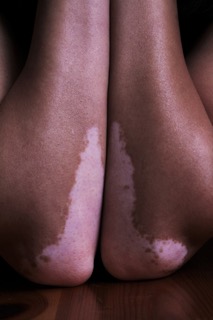
Vitiligo is a condition in which the skin loses some of its natural pigment, creating lighter patches.
These pale areas appear when melanocytes are damaged or stop functioning properly. Melanocytes are the cells responsible for producing melanin, the pigment that gives skin and hair their color.
In many cases, vitiligo is understood as an autoimmune condition, meaning the body attacks these pigment-producing cells. As a result, melanin production is reduced or stops in certain areas, and lighter patches appear.
The condition may affect small or larger areas of skin. It can also involve hair, and sometimes the inside of the mouth.
The social and emotional impact of vitiligo
Vitiligo is not contagious, and in itself it is not considered dangerous.
It is often more visible on darker skin tones, though it can appear in people of any skin color.
Even so, its effect is not only physical. For many people, vitiligo also touches self-image, confidence, and social ease. The visible change in the skin can create stress, discomfort, embarrassment, or a sense of being exposed. In some traditional societies, people with vitiligo may even withdraw socially because of stigma.
Other names for vitiligo
Vitiligo is also referred to as leukoderma, and in Hebrew it is sometimes called bahaket or baheret.
How common is vitiligo?
Around 1% to 2% of the population experience vitiligo at some point in life.
About half of those affected begin dealing with it before the age of 20.
Is vitiligo genetic?
From a holistic point of view, the answer is not necessarily.
At the same time, family patterns do appear in some cases. Research has found that in roughly 20% of cases, another family member has also had vitiligo. Some people with vitiligo also live with other autoimmune conditions.
It is important to say clearly that vitiligo is still not fully understood by conventional medicine. One common view is that it involves an autoimmune reaction against pigment cells. Another view suggests that substances released in the body may damage the cells responsible for skin color.
How conventional medicine explains the onset of vitiligo
The exact cause is still unclear, but two main explanations are often discussed in conventional medicine:
- Autoimmune response – the immune system attacks melanocytes, the cells responsible for skin pigment. This is the more common explanation, and there can be overlap with other autoimmune conditions.
- Chemical activity linked to nerve endings – in less common cases, certain chemicals released around the nerves in the skin may harm melanocytes.
Vitiligo can appear suddenly, spread quickly, and then stabilize. The pale patches may remain small or become more extensive, and they can appear in different parts of the body.
Many people report that the condition began after a significant life event, trauma, or intense emotional stress.
Conventional treatment options for vitiligo
Treatment is usually tailored to how widespread the condition is and to the person’s own needs.
For people with lighter skin, the patches may feel less visible. For those with darker skin, the contrast can be much more noticeable and distressing.
Phototherapy: UVB light treatment is considered one of the more effective options, especially when the patches are concentrated on the face and neck, and particularly when the condition has been present for less than ten years. A narrowband UVB range of 311–313 nm is commonly used.
Topical creams: Creams such as Protopic or Elidel may help in some cases, though results are not always consistent. Sometimes they are used together with narrowband UVB treatment.
Depigmentation: When vitiligo affects very large areas, some people choose treatment that lightens the remaining unaffected skin for a more even tone. This is a significant decision and not relevant to everyone.
Conventional medicine does not currently offer a complete cure for vitiligo, and treatment is usually aimed at managing symptoms and appearance.
A holistic view: what the body may be expressing
In holistic approaches, the body is not seen as making a mistake or betraying us. Symptoms are sometimes understood as part of a deeper adaptive process, even when that process is painful or difficult.
The skin is the largest organ in the body. It forms a boundary, a place of contact, separation, protection, and exposure. Because of this, some holistic traditions associate skin conditions with themes of contact, distance, separation, and vulnerability.
According to approaches such as German New Medicine and Recall Healing, vitiligo may be linked to unresolved emotional experiences involving separation, loss, shock, or a wish to distance oneself from painful contact. These frameworks interpret the symptom symbolically and emotionally rather than only physically.
This perspective is not part of mainstream medical consensus, but some people find it meaningful as a way of exploring the inner dimension of illness.
Emotional themes associated with vitiligo
From this holistic perspective, vitiligo may be connected with experiences of separation or a deep wish to separate.
That may include:
- a sudden loss
- a painful breakup or emotional rupture
- physical or emotional abuse
- an experience that left the person feeling deeply hurt, exposed, or inwardly marked
- a wish to cleanse oneself of a painful or disturbing experience
In this view, the whitening of the skin is sometimes understood symbolically as an inner movement toward cleansing, distancing, or removing the imprint of something difficult.
This does not mean that every case has one clear emotional cause, or that a person is to blame for the condition. It simply offers another doorway for inquiry.
The location of the patches
Some holistic practitioners also pay attention to where vitiligo first appears.
The area of the body may offer clues about the emotional meaning of the symptom for that person. For example, a patch that begins near the eye might be explored in connection with visual separation, something difficult to witness, or someone the person could no longer see.
This kind of reflection is not diagnostic, but it can sometimes help open a more precise inner conversation.
Itching, healing, and observation
In holistic interpretations of skin symptoms, itching is sometimes seen as connected to a healing phase.
If itching and the pale patches appear in the same place, some practitioners would understand them as related expressions of the same underlying process.
This kind of observation can be meaningful in personal inner work, while still staying grounded and seeking proper medical support when needed.
Examples of experiences that may be relevant
Some people connect the onset of vitiligo with experiences such as:
- severe or ongoing abuse
- witnessing death or a shocking event
- sexual abuse
- a brutal emotional separation
- intense grief or emotional trauma
These examples are not rules. They are possibilities that may help a person ask more honest questions about what was happening in their inner world when the condition began.
What may happen when the inner conflict softens
In holistic frameworks, when the underlying emotional conflict begins to resolve, the body may also begin to shift.
Some practitioners describe temporary skin reactions during periods of healing, followed by a gradual return of pigmentation in certain cases. This process, when it happens, is usually understood as slow and gradual.
It is important to stay careful here: each person’s path is different, and no inner process guarantees a specific physical outcome. Still, emotional processing can be deeply supportive, even when the skin changes only partially or slowly.
Important points for self-healing work with vitiligo
If you are living with vitiligo and want to explore its inner meaning, you might gently ask:
- When did it begin?
- What happened in my life around that time?
- Was there a painful separation, shock, humiliation, or loss?
- Is there an experience I have been trying to erase, purify, or distance myself from?
- Where on the body did it begin, and what does that area mean to me?
- Did I go through something that left me feeling harmed, stained, or emotionally exposed?
You do not need to force an answer.
Sometimes the body reveals its language gradually, through quiet attention rather than analysis.
In summary
Vitiligo is a physical condition with real biological expression, and it can also carry a deep emotional burden.
Conventional medicine offers useful ways to understand and manage it, even though many questions remain open. Holistic perspectives invite another layer of listening: not only to the skin, but to the emotional history the body may be holding.
If this condition is part of your life, it may be helpful to care for both sides of the experience — the medical and the emotional, the visible and the hidden.
Sometimes self-healing begins with that simple willingness: to look gently, honestly, and without blame at what the body may be asking us to feel.