My Long Story of a Short, Complete Recovery from Fibromyalgia
A personal account of pain, trauma, diagnosis, and the inner turning point through which I experienced full recovery from fibromyalgia.

My Long Story of a Short, Complete Recovery from Fibromyalgia
Written in 2018
To understand what made my recovery from fibromyalgia possible, I need to begin with what came before it.
During my army service, I was stationed in Gaza. I hadn’t wanted that placement, and I complained about it before, during, and after. At the crossing where I served, I was often the only woman in my role during a shift.
We were a small unit, just 13 people. Each shift had between two and five soldiers at the crossing. Nearby were other units as well: dog handlers, border police, UN personnel, and security inspectors. We wore formal uniforms, turquoise flak jackets, and there was, overall, a surprising atmosphere of freedom. There were almost no commanders present. Three Druze NCOs rotated through the daytime shifts, and they mostly left us to manage the crossing ourselves.
We, on the other hand, worked almost around the clock: eight hours on, eight hours off, or twelve-hour cycles, with leave every couple of weeks. And I thrived in that environment. A capable, commanding side of me came forward — the part that knew what to say and when to say it. Very quickly I was given responsibility at the crossing. The days passed relatively quietly, even while mortar shells flew overhead and alarms sounded around us.
We were responsible for the passage of foreigners and VIPs through the Erez crossing, and for upholding humanitarian procedures there. Part of our role was to allow families of security prisoners to visit them, assist foreigners who came seeking help, and carry out orders from the Ministry of Foreign Affairs. I came from a peace-seeking home and truly believed I was helping. I enlisted after the events of October, so most of my service took place during closures, when not many people were passing through Gaza.
And Then It Happened
One summer afternoon, I was on shift with four other soldiers when an officer from another unit dropped by just to sit with us for coffee. Suddenly we got a radio message: a group of Israeli Arab women had charged forward and were running toward us with wooden boards and knives.
At the time, the VIP structure looked like a giant trailer from the outside and like a hotel lobby on the inside. At the far end was a counter where border registration was handled, and under it were the heavy ceramic vests. I was standing at the counter, looking out through the large windows — mirrored from the outside, fully visible from the inside — and I saw a group of large women running toward us in a frenzy, carrying sticks and other weapons, clearly intending to attack.
It was a strange sight, considering that all the soldiers at the crossing were required to carry loaded rifles and could have opened fire within a second.
The moment I saw them, terror flooded me. My breath stopped. And in one completely automatic movement, I threw my weapon as far away from me as I could, under the other side of the counter.
An Inner Knowing
I had always known that I never wanted to shoot anyone. Not ever. I used to say this during weapons training, and whenever I was assigned guard duty. I told any commander willing to listen that if a terrorist ever came, not only would I not attack — I would throw my weapon at him and die of fear on the spot.
The Attack
The women kept running toward the VIP structure. I didn’t think. I crawled under the counter and made myself as small as I possibly could, hidden beneath the ceramic vests.
While they were there, I heard blows and screams, things crashing and breaking, shouting and curses in Hebrew and Arabic. I didn’t breathe. I didn’t move.
I stayed there, contracted and shaking in every cell of my body, long after it was over. I didn’t want to come out. I didn’t want to see what had happened.
Later I learned that when they arrived, they began physically attacking the soldiers and the visiting officer, and the soldiers hit back. It only ended when the police, who were stationed nearby, came and stopped it. The officer was later tried because one of the women miscarried during the incident — she had been pregnant.
The soldiers who had fought went back to their shift and to routine. I suppressed it all. I didn’t think about it, didn’t speak about it with the team, and didn’t tell my boyfriend or my family. It was too much for the 19-year-old version of me.
The Days After
A few days later, a new commander arrived at the base. He wanted to show how tough he was and impose order on a crossing staffed by soldiers with very little direct supervision. He ordered us to put on the heavy ceramic vests, helmets, and weapons, and stand in formation while he lectured us about procedures for more than an hour.
Anyone who knows me knows how difficult authority figures were for me then. Bosses, commanders — really anyone giving me orders, especially pointless ones — stirred up immediate turmoil inside me and pressed directly on my inner rebellion.
So there I was, standing in physical discomfort under the weight of the gear, listening to words that felt meaningless, with no room to respond or speak. I was frustrated, drifting into random thoughts, not listening at all.
And then, in a single moment, it felt as if all the muscles in my body retired at once. Everything collapsed. I dropped.
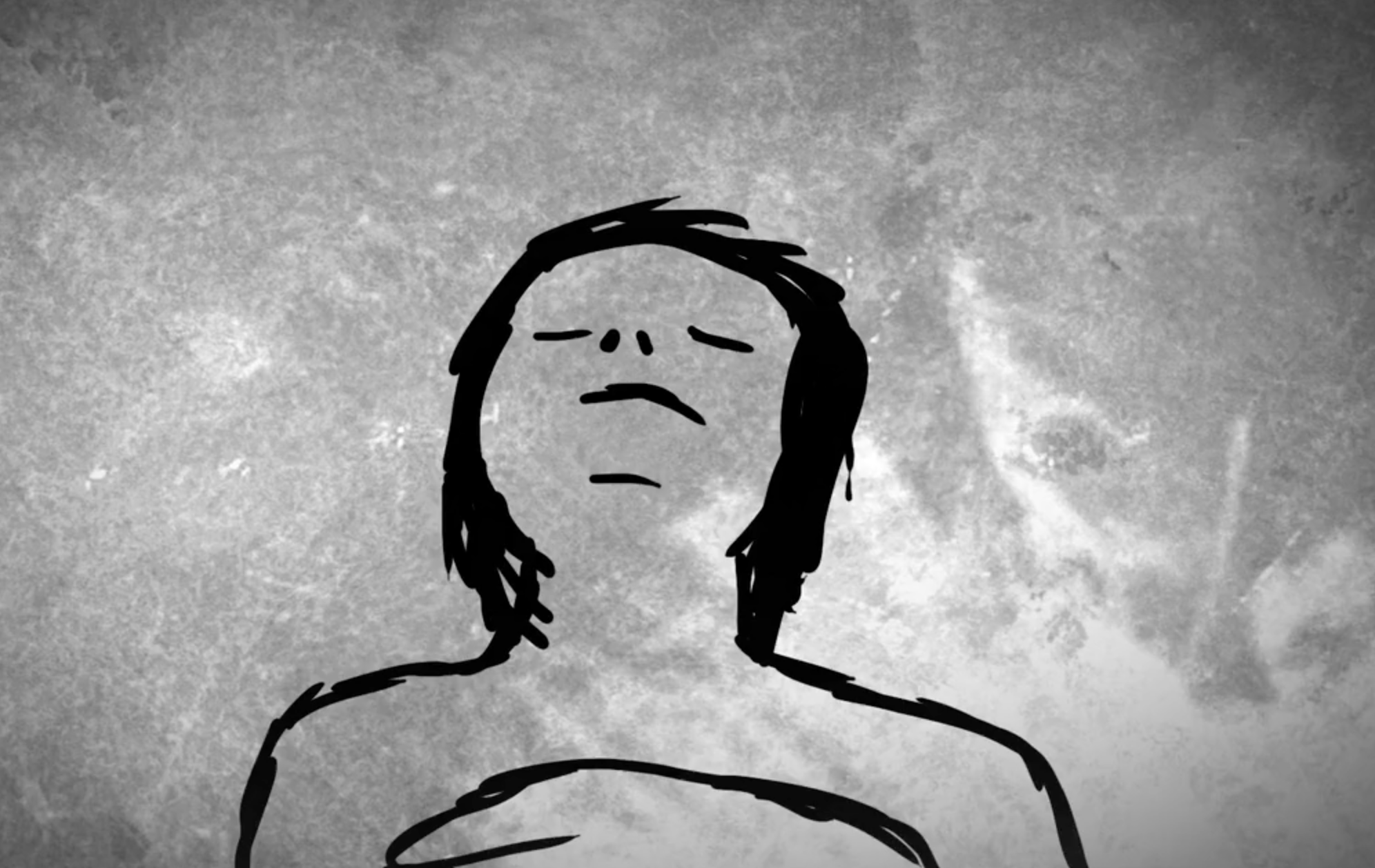
I lay there for fifteen minutes, completely paralyzed. I couldn’t move any part of my body. I couldn’t speak. Tears streamed from my eyes and panic swallowed me whole. I was sure it would last forever — that I was now paralyzed, unable to move or speak, only able to cry.
After about fifteen minutes, I managed to speak. An ambulance was called, and I entered a period of about six months of endless testing, near-constant pain, and many meetings with military doctors who mostly knew how to frighten me. My body eventually regained basic function, and I was signed off duty.
The Body’s Response
I was given so many possible diagnoses. They flooded me with chemicals through every imaginable test. The medical markers kept showing that something was wrong, but no one could say exactly what. I was exhausted all the time. My body ached as if I had been beaten.
As Time Passed
As the days went by, the panic eased. I caught up on sleep and started relaxing. For the first time in a long while, there was a strange kind of freedom. I woke up at one in the afternoon just in time to watch The Simpsons, saw my boyfriend whenever I felt like it, and aside from medical tests, I had no obligations at all. I didn’t even look for work, because who knew — maybe tomorrow I’d be sent back to base.
But as the months passed and more tests were added, my parents grew more and more anxious. They took me to an expensive professor, a specialist of some kind, hoping he would finally tell us what was wrong with their daughter.
And that is what happened. After more tests and consultations, I was given a clear diagnosis: fibromyalgia.
The Diagnosis — Fibromyalgia
I was told that fibromyalgia is a chronic condition, which meant it was not expected to go away. My quality of life, they said, would probably not be high, but exercise and a good mood might lessen the pain. People function like this, he told me. It isn’t easy, but you live with it.
This was the first time I healed myself from a chronic condition, and the first spontaneous recovery I ever experienced.
I remember the exact moment it happened. I was in one of those terrible waves of pain — sudden, overwhelming pain, as if my whole body had been beaten all at once. A friend was with me. I remember the look in her eyes as she watched me.
And there, in that moment, I decided: this is the last time.
What Fibromyalgia Is
Fibromyalgia is a chronic condition often associated with widespread muscular and skeletal pain, tender points in the body, ongoing fatigue, sleep disturbances, and cognitive difficulties.
It can appear after a specific trigger, trauma, or destabilizing event.
Its symptoms overlap with those of other conditions, which can make diagnosis difficult. It does not always show up clearly in lab work or imaging.
In the past, some doctors and researchers questioned whether fibromyalgia was a real medical condition. Today there is broader recognition of it, and some of the stigma surrounding it has eased.
Recovery from Fibromyalgia
It may sound too simple, but sometimes truth is simple.
In that moment, right there, I recovered.
Today, 15 years later, I can say clearly that I do not have fibromyalgia. Something changed in that moment in front of my friend’s eyes, and I knew it even as it was happening.
Over the years, especially in periods of emotional overwhelm, those particular familiar pains would sometimes begin to appear. But I did not agree to them, not even for a fraction of a second, and they disappeared again.
Both the Illness and the Healing Pass Through the Imagination
Last Passover I traveled to Sinai with the book Autobiography of a Yogi. There I read a sentence that moved me deeply as a practitioner, a teacher of practitioners, and above all as someone who guides people toward self-healing:
“Imagination is the door through which both disease and healing enter … Do not believe in the reality of disease. An unwelcome guest will flee.”
This article is a reminder from my heart to anyone who needs it. The body is wondrous and capable of far more than we understand. So are the emotions, the psyche, and the soul.
Healing Consciousness Through the Body
Everything we experience in this world is experienced through us. Sometimes the body resolves what we ourselves cannot. Illness or disruption may become an instrument through which consciousness tries to heal, release, or resolve emotional conflicts that we have not been able to process otherwise.
Healing Through Decision
Over the years I have studied and encountered many healing methods. In some of them I went very deep — studying, researching, and specializing. In time I even developed a healing technique that came through me.
What I came to understand is that whatever consciousness creates is, at a higher level, often serving us in some way — even difficulty, even illness. That is why it can be so relieving and helpful to understand what the body is trying to resolve. When we understand what the body is showing us, healing can emerge through that understanding, and growth can emerge with it.
But — and this is a big but — sometimes, and only sometimes, growth and healing can come through a decision.
There are approaches that explain fibromyalgia through the lens of unresolved emotional conflict and the body’s attempt to manage it. I encountered one such framework many years after my own recovery, and it gave language to something I had already lived: that awareness of the inner conflict can sometimes help release what the body has been carrying.
In Closing
Fibromyalgia is not only a physical condition. For many people, it is also bound up with emotional strain, overwhelm, and deep inner conflict. Looking at those layers may open additional ways of relating to the condition and living with it more gently.
If you are living with fibromyalgia, I hope this story offers possibility, dignity, and a deeper trust in your own inner wisdom.
And if this speaks to someone you love, feel free to share it.